
Perimenopause Bloating: Causes, Hidden Triggers & What Helps

Perimenopause Bloating: Causes, Hidden Triggers & What Helps

Affiliate & Medical Disclosure
Disclosure: This post contains affiliate links. If you purchase through these links, I may earn a small commission at no extra cost to you. I only recommend products I've personally vetted for quality, third-party testing, and bioavailability.
Medical Disclaimer: The information in this article is for educational purposes only and is not intended as medical advice, diagnosis, or treatment. Always consult your licensed healthcare provider before starting any new supplement, especially if you are taking prescription medications, have an existing health condition, or are pregnant or breastfeeding. Individual needs vary, and what works well for one person may not be appropriate for another.

There is something especially frustrating about feeling bloated when you are already trying to eat well. You make the smoothie, choose the salad, and pass on the fast food, yet by evening your stomach feels tight enough that changing into loose pants becomes the best part of your day.

Then comes the advice. Eat more fiber, stop eating bread, take a probiotic, or try another supplement that promises to fix your gut. Following all of that can leave you with a cupboard full of products and very little idea of what helps.

If your digestion has changed during perimenopause, the answer may be hiding in details you have never been asked about. How comfortably you use the bathroom, the ingredients in your morning shake, and the way symptoms build through the day can tell you more than another list of foods to avoid.

Why does bloating show up during perimenopause?

Perimenopause bloating can develop alongside hormonal changes, but hormones are not the only possible cause. Constipation, food intolerance, IBS, and changes in gut sensitivity can all play a part. Finding the pattern behind your discomfort helps you choose a more useful next step.

Digestive changes during this stage are common enough to deserve a proper conversation. In one study group of nearly 600 women aged 44 to 73, 77% reported bloating. That figure describes the participants, not every woman going through menopause.

It is tempting to put every new symptom down to hormones, especially when your periods, sleep, and mood are changing too. But “perimenopause” should be the start of the conversation about your digestion, rather than the end of it.

Your stomach feels bigger. Does that mean weight gain?

When your pants fit at breakfast and feel snug after dinner, you have not gained body fat over the course of a few hours. That daily change gives you something useful to notice before you decide to eat less.

Bloating means the feeling of pressure or fullness. A visible increase in belly size is called distention, and you can experience either one on its own or both together.

Changes in body composition may happen during the same stage of life, which can make the whole picture confusing. Still, a stomach that feels swollen and uncomfortable deserves attention as a digestive symptom, not simply another reason to start a diet.

Start with the bathroom, not the food list

If you have been blaming lunch for your afternoon bloating, pause for a moment and think about your last bowel movement. Passing stool is only part of the story; passing it comfortably and feeling finished matter too.

You can go every day and still have constipation. Hard stools, straining, pain, or the sense that there is more to pass can all be signs, even when you never skip a day.

For a few days, pay attention to what happens afterward. Does the pressure ease, or do you leave the bathroom feeling just as full? Those details are worth sharing with your healthcare provider.

Why another scoop of fiber may miss the problem

Perhaps you already eat oatmeal, vegetables, seeds, and a fiber supplement. If your bowel movements remain difficult, simply adding more without reviewing the amount and type may make the routine harder to tolerate.

Bring the names and doses of your fiber products to your appointment. That gives your clinician or dietitian a clearer picture than saying you eat a high-fiber diet.

If passing stool stays difficult despite previous treatment, ask whether your pelvic floor needs attention. Those muscles help with bowel emptying, and a problem with their coordination may need a different approach, including biofeedback when a pelvic floor disorder is identified.

The healthy extras are worth a closer look

Your meals may be fairly simple, while the extras have become more complicated. A scoop of prebiotic powder, a high-fiber bar, and a sugar-free snack can slip into the day without seeming like much.

Look at their ingredient lists side by side. Inulin and chicory-root fiber often appear in products sold for gut health, while sorbitol and other sugar alcohols appear in some sugar-free foods. Certain carbohydrates, added fiber, and these sweeteners can increase gas symptoms for some people.

That does not mean the products are bad or that everyone needs to avoid them. It means your morning routine may contain a clue that is easy to miss when you are only looking at meals.

Try changing one thing you can actually track

Suppose the pressure started around the time you added a new bar or powder. Instead of giving up dairy, bread, and coffee together, begin by reviewing that one optional addition.

Keep the rest of your meals reasonably steady and watch what happens over several days. If a product was recommended for a medical reason, check before changing it, and leave prescribed medicines alone unless your prescriber advises otherwise.

A clear result from one change is much easier to use than feeling a little better after changing everything. You also have a better chance of keeping foods you enjoy.

A food trigger is not always a lifelong ban

One uncomfortable meal can make you suspicious of everything on the plate. Before you decide a food is off-limits, write down what you ate, how much you had, and whether the same pattern happens again.

Milk is a good example to bring up with your clinician. A repeated reaction may lead to a focused trial or assessment of lactose digestion, rather than a blanket rule to avoid all dairy foods.

If bread seems connected, ask about celiac testing before going gluten-free. Removing gluten first can affect test results, making a clear answer harder to find.

You are looking for information that helps you eat with more confidence. A growing list of feared foods can make meals more stressful without explaining the original problem.

When less food does not bring more comfort

Some women keep narrowing their diet because nearly every meal seems to cause pressure. If that is happening to you, the problem may involve more than the foods on your plate.

Your gut can be more sensitive to normal amounts of gas, and changes in how your abdominal muscles coordinate can contribute to swelling. Stress can also affect symptoms through the gut-brain connection.

This helps explain why care sometimes includes breathing exercises or gut-focused behavioral support alongside nutrition. Your symptoms are real, and understanding that connection can open up options that another food restriction would miss.

Tell your healthcare provider if your diet has become much smaller while your discomfort has stayed the same. That is an important detail, especially if you are struggling to eat enough.

What does a useful root-cause approach look like?

The appeal of functional medicine and naturopathic care is that someone takes time to connect the dots. You want to understand your symptoms and have a plan that fits your life, rather than keep guessing at the next product.

A useful whole-person review includes meals, bowel habits, medicines, supplements, sleep, and the timing of symptoms. Testing comes next when there is a clear question to answer.

You can make that conversation more productive by bringing a short record of the patterns below. These are clues to discuss, rather than diagnoses to make at home.

The pattern you notice What to ask about
Hard stools, straining, or incomplete emptying Could constipation be contributing?
Discomfort after a new bar, powder, or sugar-free food Could an added ingredient be involved?
A repeated reaction after milk or certain carbohydrates Would a focused food trial or breath test help?
Trouble passing stool despite treatment Could my pelvic floor need assessment?
Many food exclusions without much improvement Should we look beyond food triggers?
Persistent swelling, pelvic pain, or feeling full quickly Do I need an examination before diet changes?

Ask what a test will change

Before paying for a test, ask what the result would mean for your care. Knowing what happens next can help you decide whether the test is useful for your particular situation.

Depending on your history, targeted testing may include celiac blood tests, assessment of carbohydrate intolerance, or selected testing for small intestinal bacterial overgrowth, often called SIBO. Bloating alone does not show that you have SIBO or need a SIBO treatment protocol.

Broad IgG panels are not recommended for diagnosing food allergies or intolerances. A positive result can reflect exposure to a food rather than a harmful reaction, so a long list of results may create more food rules without giving you reliable answers.

How to make meals feel manageable again

You do not need to create the perfect perimenopause bloating diet overnight. Start with familiar meals that sit comfortably, and use the pattern you have noticed to choose a small adjustment.

If large meals leave you uncomfortable, try spreading the same nourishment across smaller meals. If a carbonated drink stands out, replace that first instead of questioning every ingredient in your lunch.

The aim is to keep enough variety and nourishment while learning what works for you. A plan that leaves you hungry, worried about meals, or avoiding more and more foods needs a second look.

Low-FODMAP does not mean low-variety forever

A low-FODMAP diet can help identify certain carbohydrates that trigger symptoms in people with IBS. You may have seen lists of foods to remove, but those lists only describe the beginning of the process.

The full approach has three stages: reducing FODMAPs, bringing foods back, and building a personal eating plan. The first stage generally lasts two to six weeks with a trained dietitian's guidance.

Bringing foods back is how you learn which groups and amounts you tolerate. That information helps you build a wider diet rather than stay stuck on the strict version.

If you already avoid many foods, have trouble meeting your nutrition needs, or have a history of disordered eating, discuss those concerns before starting. Your comfort and your nourishment both belong in the plan.

Before you buy another gut supplement

A bottle can feel like a simple answer when food changes have become exhausting. Before buying, get clear on what the product is supposed to address and how you would know whether it helps.

Probiotics are not recommended as a treatment for abdominal bloating and distention. A bigger number on the label or more strains does not make a product the right answer for unexplained symptoms.

Digestive enzymes need a specific purpose too. Ask which digestive problem an enzyme is meant to address, rather than assume that a broad blend will make every meal easier.

My supplements guide covers wider nutrition questions during perimenopause. Bring a complete list of what you use to your healthcare provider or pharmacist, including powders and teas, so the conversation includes the whole routine.

Give yourself a simpler starting point this week

If your symptoms are mild and you have none of the warning signs below, spend a few days watching the pattern. A few notes on your phone are enough; this does not need to become another demanding health project.

  1. Note when discomfort starts. Include meal times, bowel movements, sleep, and any connection to your period.
  2. Write down the extras. Bars, powders, supplements, teas, and fizzy drinks count too.
  3. Choose one small change. Try replacing an optional carbonated drink with still water while keeping meals steady.
  4. Look for a pattern over several days. Notice changes in pressure, swelling, and how comfortably you use the bathroom.
  5. Bring the notes if you need help. A short, clear record gives your healthcare provider something useful to work with.

You are learning about your digestion, not grading your food choices. If symptoms continue, the notes can help you move from vague discomfort to a more focused conversation.

When bloating needs medical attention

Regular bloating, symptoms that do not go away, or discomfort that continues despite food changes deserves a medical appointment. Blood in your stool or weight loss you did not intend also needs assessment.

Persistent swelling with pelvic pain, feeling full unusually quickly, or needing to urinate more often should be checked. These symptoms can have several causes, including ovarian conditions, and should not be dismissed as perimenopause.

Seek urgent care for severe or sudden belly pain, repeated vomiting, or a swollen abdomen when you cannot pass stool or gas. Vomiting blood or severe breathing difficulty requires emergency help.

A little structure can make the next step easier

Knowing what to look for is helpful, but turning that into everyday meals can still feel like a lot. I created the Perimenopause Bloat Plan to give you a practical place to begin, with a food-first approach designed for this stage of life.

The guide includes a 14-day roadmap, 13 simple recipes, a grocery list, meal-building tools, and a bloat tracker. The “Your Personal Bloat Detective” worksheet helps you organize the patterns you notice without having to build your own system from scratch.

Explore the plan or get your copy. For help shaped around your food habits and wider health goals, you can also explore private support.

The guide supports everyday nutrition and pattern tracking. Persistent symptoms still deserve medical care, even while you are working on your meals.

A few questions you may still have

Why am I bloated even though I eat healthy?

Healthy foods and products can contain ingredients that trigger symptoms for you. Bowel habits and gut sensitivity may also contribute, so look at the whole pattern before removing more foods.

Can I be constipated if I go every day?

Yes. Hard stools, straining, or feeling that you have not finished can be signs of constipation even with daily bowel movements. Those details are worth sharing with your healthcare provider.

How long does perimenopause bloating last?

There is no set timeline that applies to everyone. Persistent or worsening symptoms need assessment rather than waiting for perimenopause to end.

Is menopause bloating the same as belly fat?

Bloating is pressure or fullness, and visible swelling is called distention. Body fat changes happen differently, although both can occur during the same stage of life.

Should I go gluten-free?

Ask about celiac testing first if you suspect gluten is involved. Removing gluten before testing can affect the results and make finding an answer harder.

Does bloating mean I have a hormone imbalance?

Bloating alone cannot tell you what your hormone levels are doing. Discuss your period changes and other symptoms while also looking at possible digestive causes.

This article shares general education and does not replace medical advice. Talk with your healthcare provider about persistent symptoms or significant dietary and supplement changes, especially if you have a health condition or take medication.

Medical & FDA Disclaimer
Medical Disclaimer: The content on this website, including this article, is provided for informational and educational purposes only. It is not intended to substitute for professional medical advice, diagnosis, or treatment. Always seek the guidance of your physician, OB-GYN, or other qualified health professional with any questions you may have regarding a medical condition or before beginning any new supplement or health program. Never disregard professional medical advice or delay seeking it because of something you have read on this website. Individual results from supplementation vary and are not guaranteed.
FDA Disclaimer: These statements have not been evaluated by the Food and Drug Administration. The supplements discussed in this article are not intended to diagnose, treat, cure, or prevent any disease.

Best Perimenopause Supplements: Complete Evidence-Based Guide (2026)

Best Perimenopause Supplements: Complete Evidence-Based Guide (2026)

Affiliate & Medical Disclosure
Disclosure: This post contains affiliate links. If you purchase through these links, I may earn a small commission at no extra cost to you. I only recommend products I've personally vetted for quality, third-party testing, and bioavailability.
Medical Disclaimer: The information in this article is for educational purposes only and is not intended as medical advice, diagnosis, or treatment. Always consult your licensed healthcare provider before starting any new supplement, especially if you are taking prescription medications, have an existing health condition, or are pregnant or breastfeeding. Individual needs vary, and what works well for one person may not be appropriate for another.
Walk into any health food store and ask about perimenopause, and someone will point you toward an entire aisle of options. Supplements for hot flashes. Supplements for mood. Supplements for sleep, energy, hormones, weight gain, and brain fog. The labels look convincing, and the prices are steep. Most women leave with a bag full of bottles and no idea if they bought the right things.
That confusion is not your fault. The perimenopause supplement market is huge, loosely regulated, and packed with products that make big promises but don't deliver. That said, some supplements really do work. There are nutrients and plants backed by solid research that can help your body through this major hormonal shift. The hard part is knowing which ones are worth your money.
As an AFPA Certified Perimenopause Nutrition Coach, I've helped hundreds of women in their 40s sort through exactly this. Most women don't need 15 supplements. They need the right 6 to 8, chosen for their specific symptoms, in forms their bodies can actually use, at amounts supported by the research. This guide gives you that roadmap, built on evidence, not marketing.

What's Actually Happening in Your Body (And Why Supplements Help)

Perimenopause typically starts in a woman's early-to-mid 40s. Some women notice changes as early as 38. Others don't feel a shift until 51. It brings rising and falling hormone levels, irregular periods, and a wide range of symptoms.
Hot flashes, night sweats, broken sleep, mood swings, brain fog, joint pain, and weight gain around the middle are all common. The average length of perimenopause is four to eight years, though every woman's experience is different.

Why Your Nutrition Needs Change During Perimenopause

Most people don't talk about the nutrition side of this shift. Estrogen doesn't just control your cycle. It also affects how well your body absorbs calcium, processes vitamin D, makes collagen, regulates mood, and clears used hormones from your system. When estrogen starts to swing up and down, all of those processes are affected, too. Your body needs more of certain nutrients. At the same time, digestion and food absorption get less efficient with age.
Research from organizations such as The Menopause Society shows that women in perimenopause often struggle to maintain healthy levels of key nutrients. Vitamin D, magnesium, B vitamins, and omega-3 fatty acids are the most common deficiencies. Hormone shifts, slower metabolism, and changing eating habits during midlife all play a role. These aren't random shortfalls. They're predictable, and they're why the right perimenopause supplements can make a real difference in how you feel.

The 6 Essential Vitamins for Perimenopause

Vitamin D: Far More Than a Bone Supplement

Most women know vitamin D protects bones. What few know is that it works more like a hormone than a vitamin. Your body makes it from sunlight, then converts it into a compound that helps regulate your immune system, mood, blood sugar, and hormone levels. During perimenopause, vitamin D becomes even more important because estrogen and vitamin D work together to maintain bone strength. As estrogen dips, vitamin D has to pick up more of the work.
Research shows that women with low vitamin D during perimenopause tend to have more hot flashes, more depression, and worse sleep. Women with sufficient vitamin D levels report much better overall symptom control.
The National Institutes of Health recommends 600 IU daily as a starting point for adults. Most practitioners who work with perimenopausal women suggest 2,000 to 4,000 IU daily. The best way to know your right dose is to ask your doctor for a 25-OH vitamin D blood test.
Always choose vitamin D3 over D2. D3 is the form your body naturally makes. It raises blood levels about twice as much as D2. Pairing it with vitamin K2 makes sense because K2 sends calcium to bones instead of letting it build up in artery walls. These two nutrients work better together.
The product I recommend most to clients is Thorne's Vitamin D/K2 liquid. It provides both nutrients in an easy-to-absorb form, with no fillers. If you prefer a capsule, Sports Research D3+K2 is a solid, third-party tested option that costs less. For women who have trouble swallowing capsules, Nordic Naturals makes a clean D3 gummy.

B-Complex Vitamins: Energy, Mood, and Hormone Clearance

The B vitamins, especially B6, B12, and folate, are important during perimenopause. They play a key role in three things: energy production, nerve function, and how your liver processes estrogen.
That last one is worth slowing down on. Your liver removes used estrogen through a process called methylation (meth-ih-LAY-shun). Think of it as packaging up hormones so your body can flush them out. B6 and folate are required for this process. When these vitamins are low, estrogen is cleared more slowly. That leads to the hormone imbalance behind symptoms like bloating, breast soreness, irritability, and heavy periods.
B12 needs its own spotlight. After age 40, your stomach naturally makes less acid, which makes it harder to absorb B12 from food. Here's the problem: low B12 can cause fatigue, brain fog, mood swings, and tingling in the hands or feet. Those symptoms look almost exactly like perimenopause. Many women end up treating hormones when a simple B12 shortfall is actually to blame.
When shopping for a B-complex, look for methylated forms: methylcobalamin for B12 and methylfolate for folate. These are the ready-to-use versions. They skip a conversion step that many women can't do well due to a gene variant called MTHFR. Thorne Basic B Complex uses methylated forms and is my go-to first recommendation. Pure Encapsulations B-Complex Plus is another clean, methylated option. Garden of Life's B Complex is a solid whole-food choice for women who prefer nutrients from natural sources.

Vitamin E: Underrated Relief for Hot Flashes

Vitamin E doesn't get enough attention for perimenopause, but the research behind it is real. A clinical trial in Gynecological Endocrinology found that 400 IU of vitamin E daily cut hot flash frequency and severity over eight weeks. Vitamin E is also a key antioxidant (a substance that protects your cells from damage), and that protection matters more during hormonal shifts.
The type of vitamin E on the label makes a big difference. Natural vitamin E is listed as d-alpha-tocopherol. Synthetic vitamin E says dl-alpha-tocopherol. That extra "l" means it absorbs about half as well. Even better, look for "mixed tocopherols," which gives you the full range of vitamin E forms, not just one. The typical amount for hot flash relief is 400 to 800 IU daily.
One safety note: Vitamin E slightly thins the blood. If you take a blood thinner like warfarin, check with your doctor first. For a reliable option that hits all the right marks, I most often suggest Solgar Natural Vitamin E 400 IU with mixed tocopherols. Women with food sensitivities often do well with Pure Encapsulations Vitamin E, which is free of common additives.

Vitamin C: Collagen, Cortisol, and More

Vitamin C gets used up fast under stress. Many women in perimenopause run high cortisol (stress hormone) levels due to how sex hormones and the adrenal glands interact. Beyond fighting off illness, vitamin C is needed to make collagen, the protein that keeps skin firm, joints cushioned, and tissues strong. As estrogen levels drop and collagen production slows, getting enough vitamin C can help slow that decline.
Research shows vitamin C helps your body manage cortisol, which is your main stress hormone. High cortisol makes perimenopause symptoms worse. It disrupts sleep, adds belly fat, and lowers progesterone. Keeping cortisol in check has real, practical benefits for how you feel day to day.
A dose of 500 to 1,000mg daily works well for most women. Splitting it helps your body use more of it. Take 500mg with breakfast and 500mg with lunch. Vitamin C is water-soluble, so your body passes out what it doesn't use right away.

Three Vitamin C Options Worth Knowing

For a gentle, easy-to-absorb option, Pure Encapsulations Vitamin C 1000mg is a solid everyday pick. Thorne Vitamin C with Flavonoids adds plant compounds that help your cells take in more of the vitamin.
For the highest absorption available, LivOn Labs Lipo-Spheric Vitamin C uses a liposomal delivery system. It wraps the vitamin in fat so that far more of it reaches your cells. It costs more, but for women under heavy stress or dealing with real collagen loss, the difference is worth it.

Vitamin K2: The Bone and Heart Protector

Vitamin K2 is not the same as the K1 found in leafy greens, and that difference matters. K2 activates two key proteins in the body. The first, osteocalcin (say: os-tee-oh-KAL-sin), locks calcium into bone tissue. The second, matrix Gla protein, prevents calcium from building up in arterial walls. During perimenopause, when bone loss speeds up and heart disease risk rises, K2 goes from optional to essential.
The most studied form of K2 is called MK-7 (menaquinone-7). It stays active in the body longer than the MK-4 form and works at lower doses. A 2013 study in Osteoporosis International found MK-7 supplementation clearly improved bone strength in postmenopausal women. Evidence for perimenopausal women points in the same direction, and the case for starting early is strong. A standard dose is 90 to 200mcg of MK-7 daily.
K2 absorbs best with vitamin D3 and some dietary fat, so taking a combined product at your biggest meal of the day makes sense. The Thorne D3/K2 liquid covers both nutrients in one product. For women who prefer a K2-only supplement, Life Extension Super K combines MK-4 and MK-7 in a single capsule.

Calcium: Food First, Supplement Strategically

Calcium is the most well-known bone mineral. It's also one of the most overused supplements in the perimenopause space. Taking too much calcium when you already get enough from food can actually raise your risk of heart problems. The goal is to meet your needs, not pile on more.
Perimenopausal women need 1,000 to 1,200mg of calcium per day, total, from both food and supplements combined. Good food sources include dairy products, fortified plant milks, canned salmon with bones, almonds, and dark leafy greens like kale and bok choy. If your diet regularly falls short of 800mg, a 200 to 400mg supplement fills the gap without the risks associated with higher amounts.
Calcium citrate is the best form to look for. It absorbs better than calcium carbonate, works without food, and is especially helpful for women with low stomach acid, which gets more common after 40. Garden of Life mykind Organics Plant Calcium is a whole-food option that also includes K2 and D3 in one product. For a clean calcium citrate on its own, Pure Encapsulations Calcium Citrate is easy to absorb and free of unnecessary fillers.

Key Minerals That Perimenopausal Women Are Frequently Missing

Magnesium: The Most Important Mineral You're Probably Not Getting Enough Of

Magnesium is involved in over 300 processes in the body. It supports deep sleep, calms the nervous system, relaxes muscles, and helps keep blood pressure steady. These are all areas that tend to get worse during perimenopause. Magnesium also helps control blood sugar, which matters more as your body's response to insulin starts to change during this time.
The National Institutes of Health estimates that nearly half of all Americans don't get enough magnesium. Stress makes the problem worse because it depletes magnesium quickly. Women in their 40s juggling demanding jobs, family duties, and poor sleep burn through magnesium faster than it can be replenished.

Which Form of Magnesium Is Right for You

The form of magnesium you take determines how much your body actually gets. For sleep, anxiety, and nervous system support, I recommend magnesium glycinate (also called bisglycinate) to most clients. It absorbs well and is easy on the stomach. Thorne Magnesium Bisglycinate is my first pick: clean formula, well-tested form, no surprises. If budget matters, Doctor's Best High Absorption Magnesium Glycinate offers the same form for less.
For women who prefer a powder, Natural Vitality Calm stirs easily into water and works a bit faster for muscle tension and constipation. If brain fog is your main concern, Life Extension Neuro-Mag uses magnesium L-threonate. It's the only form studied specifically for raising magnesium levels in the brain.
A good starting range is 300 to 400mg daily. Start with 150 to 200mg and build up slowly over two to three weeks to let your body adjust and avoid any stomach upset.

Iron: Test Before You Supplement

Heavy or irregular periods are common in perimenopause, and heavy bleeding drains iron faster than diet can replace it. Low iron causes fatigue, shortness of breath, heart pounding, and fuzzy thinking. These look almost exactly like perimenopause symptoms, and many women blame hormones when their iron stores are actually the problem.
The most important rule with iron: test before you take it. Unlike most nutrients, extra iron doesn't leave the body easily and can build up to levels that cause cell damage. A simple ferritin blood test (ferritin is the protein that stores iron) shows you where your levels actually stand. Many practitioners consider a ferritin level below 30 ng/mL too low. A standard lab report might call it "normal," but that number is worth discussing with your doctor. If yours is low, supplementing makes sense.
Iron bisglycinate is the best supplemental form. It absorbs better than ferrous sulfate (the form found in most drugstore iron pills) and causes far less constipation and nausea. Those side effects are exactly why so many women stop taking iron before it has time to help. Thorne Iron Bisglycinate is gentle enough to take every day and strong enough to raise ferritin meaningfully. Once levels are back up, Garden of Life mykind Organics Iron is a whole-food option that works well for long-term daily use.

Zinc: Hormone Production and Immune Defense

Zinc supports progesterone production and immune function, both of which shift during perimenopause. Low progesterone is often one of the first changes women notice, and it shows up as anxiety, sleep trouble, and heavy periods. Zinc won't replace progesterone, but your body needs it to make and regulate progesterone in the first place.
Zinc picolinate and zinc bisglycinate are the easiest forms for the body to absorb. A daily dose of 15 to 30mg works for most women. Don't exceed 40mg without medical guidance, as too much zinc can block copper absorption. Taking zinc with food helps prevent the nausea some women get with higher doses. Thorne Zinc Picolinate 30mg checks every box: clean label, right form, right amount. Pure Encapsulations Zinc 30 is just as good and a smart choice for women already using that brand.

Omega-3 Fatty Acids: Essential for Brain, Heart, and Inflammation

Omega-3 fats belong on every perimenopausal woman's supplement list. EPA and DHA are the two active forms found in fish. They rank among the most studied nutrients for heart health, brain function, mood, and inflammation control.

How Omega-3s Address Perimenopause Specifically

Perimenopause brings more inflammation into the body. Because estrogen actually lowers inflammation, when estrogen levels swing, those windows of lower estrogen allow inflammation to rise. This contributes to joint pain, brain fog, and increased heart disease risk. Omega-3s help counter that.
In the brain, DHA is the main structural fat. Strong DHA levels are linked to better memory and a lower risk of mental decline. Brain fog is one of the most common and frustrating perimenopause symptoms, and omega-3s are one of the best-researched tools for it.
Aim for 1,000 to 2,000mg of combined EPA+DHA daily. Buy from brands that publish their TOTOX values, which measure how fresh the oil is. Rancid fish oil can do more harm than good, and it's more common than most people think.

Choosing a Quality Fish Oil

For quality and freshness, Nordic Naturals Ultimate Omega is the standard I use to compare everything else. It's third-party tested, consistently fresh, and reliable. If mood is your main concern and you want more EPA in the mix, Thorne Super EPA is the focused option. For high quality at a lower price, Carlson Elite Omega-3 has been trusted for decades and earns that reputation.

Herbal Supplements for Perimenopause: What the Evidence Actually Supports

Black Cohosh: The Most Studied Herb for Hot Flashes

Black cohosh (Actaea racemosa) has the best evidence of any herb for reducing hot flashes in perimenopause. It doesn't act like estrogen in the body, which makes it a possible option even for women with estrogen-sensitive conditions. Those women should still check with their doctor first.
The effective dose is typically 20 to 40mg of standardized extract twice daily, and the specific product matters here more than with most herbs. Most clinical studies used a product called Remifemin. So, Remifemin Black Cohosh is my first suggestion for women who want the most-studied form. For a high-quality, organic liquid capsule, Gaia Herbs Black Cohosh is a strong alternative.
Give either product 8 to 12 weeks before you judge the results. Herbs work more slowly than drugs, and women who stop at four weeks often quit just before the benefit kicks in.

Ashwagandha: Stress, Sleep, and Cortisol Balance

Ashwagandha (Withania somnifera) is an adaptogen, a type of herb that helps your body better handle stress. It works by calming the HPA axis, the system that regulates cortisol production. During perimenopause, the adrenal glands take on more hormone work as the ovaries become less predictable. Giving them support during this shift is a smart, research-backed move.
A 2019 clinical trial in Medicine found that ashwagandha reduced stress and anxiety, improved sleep, and lowered cortisol in people under chronic stress. That directly applies to women navigating perimenopause.
Look for products labeled KSM-66 or Sensoril. These are the tested, concentrated extracts used in the research. Cheap generic "ashwagandha root powder" on Amazon is not the same thing. Gaia Herbs Ashwagandha Root uses organic herb in a liquid capsule form that absorbs well.

Maca Root: Energy, Libido, and Hormonal Resilience

Maca (Lepidium meyenii) is a root from Peru. It has a long history of use for energy, sex drive, and fertility. Maca doesn't contain hormones. It seems to work by supporting your body's own hormone system, making it a gentler choice than herbs that act like estrogen. When buying maca, choose gelatinized maca (pre-cooked to break down the starch) over raw maca powder. It absorbs better and is much less likely to upset your stomach. Gaia Herbs Maca Root is a well-tested liquid capsule extract.

Red Clover: Phytoestrogen Support

Red clover (Trifolium pratense) contains isoflavones, plant compounds that weakly mimic estrogen in the body. This type of plant compound is called a phytoestrogen (say: FY-toe-es-tro-jen). Some women experience real hot-flash relief with red clover. Research results have been mixed, with the strongest effects in women who have more severe symptoms and lower estrogen levels to start.
The extract used in most clinical studies is the Promensil formula, standardized to 40mg of isoflavones. Promensil Menopause Red Clover Isoflavones is most closely tied to the research, and it is my starting recommendation for clients who want to try this approach. One important caution: women with a history of estrogen-sensitive breast cancer, uterine cancer, or endometriosis should speak with their doctor first. Red clover has estrogen-like activity.

Specialty Supplements Worth Considering

Probiotics: The Gut-Hormone Connection

Your gut bacteria play a bigger role in hormone balance than most people expect. A group of gut bacteria called the estrobolome produces enzymes that help the body process and recycle estrogen. When those bacteria are out of balance, estrogen metabolism suffers. Beyond hormones, your gut affects mood through the gut-brain connection, immune strength, and how well you absorb every other nutrient in this guide. A struggling gut can undermine even the best supplement plan.
Look for a women's probiotic containing several strains of Lactobacillus and Bifidobacterium. Aim for at least 10 billion CFU (colony-forming units, the measure of live bacteria). Garden of Life Dr. Formulated Probiotics for Women delivers 50 billion CFU across 16 strains and is designed with women's hormone health in mind. It's what I recommend most when clients are starting fresh.

DIM: Supporting Healthy Estrogen Metabolism

DIM (diindolylmethane, dy-in-DOLE-il-METH-ane) comes from cruciferous vegetables like broccoli, cauliflower, and Brussels sprouts. It helps the liver process estrogen in a healthier way, steering it toward a less potent form and away from those linked to estrogen dominance.
Estrogen dominance is what happens when estrogen is too high relative to progesterone. Symptoms include heavy periods, bloating, breast tenderness, weight gain, and mood changes. DIM works best when paired with enough B vitamins, since both support the same liver clearance pathway. A standard dose is 100 to 200mg daily with food. Pure Encapsulations DIM Detox combines DIM with B vitamins in a single formula, keeping things simple. Thorne DIM Advantage uses a clean, standard dose and fits well for women already using Thorne products.

Collagen: Skin, Joints, and Structural Support

Estrogen controls how much collagen your body makes. As estrogen levels drop during perimenopause, collagen production slows, too. That shows up as thinner skin, more joint aches, and slower healing. Clinical trials show collagen peptide supplements can improve skin firmness, reduce joint pain, and support bone density when taken with calcium and vitamin D.
Choose hydrolyzed collagen peptides (also called collagen hydrolysate), where the collagen is broken into small pieces that your body absorbs easily. Types I and III support skin and tendons. Type II focuses on cartilage and joints. Vital Proteins Collagen Peptides is widely used, well-made, and easy to mix into coffee or a smoothie.

How to Choose Quality Supplements: The Non-Negotiables

The FDA does not check supplements for safety or effectiveness before they hit store shelves. That responsibility falls entirely on the manufacturer, and not all companies take it seriously. Knowing what to look for keeps you safe and saves you money.

What to Look for on the Label

Third-party certification is the best quality signal you can find. Look for products that are NSF International- or USP (U.S. Pharmacopeia)- tested and approved. These outside organizations verify that products contain what the label says, in the right amounts, with no harmful contaminants, such as heavy metals or pesticides.
Absorption matters just as much as the dose on the label. Magnesium oxide absorbs at about 4%. Magnesium glycinate has an absorption rate of over 80%. Choosing the right form often makes more difference than the milligram count. Cheap supplements often use poorly absorbed forms to keep prices down. Saving $5 a month means nothing if the nutrient never reaches your cells.
The brands I trust most across the board are Thorne, Pure Encapsulations, Garden of Life, Nordic Naturals, Gaia Herbs, and Life Extension. Each one meets high manufacturing standards and has testing data to prove it.

Reading the Other Ingredients List

Check the "Other Ingredients" section of any supplement label before buying. Good products have short lists: the active ingredient, maybe one or two things needed to make the capsule, and nothing else. Artificial colors, hydrogenated oils, extra fillers, and "proprietary blends" that hide individual doses are red flags worth taking seriously.

A Practical Perimenopause Supplement Schedule

Taking supplements at the right time helps your body absorb them better and avoids common conflicts between nutrients. Here's a simple daily schedule that works for most women:
Morning (with breakfast): B-complex vitamins, vitamin C (first dose), zinc (with food to avoid nausea), probiotic (or follow label directions)
Midday (with lunch, ideally your biggest or fattiest meal): Vitamin D3+K2, vitamin E, omega-3 fish oil, vitamin C (second dose). Fat-soluble vitamins are better absorbed when taken with dietary fat.
Evening (with dinner or 1 hour before bed): Magnesium glycinate, collagen peptides (stirred into warm liquid), ashwagandha (if using for sleep)
If you supplement with iron, take it on an empty stomach with vitamin C for the best results. Keep it away from calcium, magnesium, and coffee, which all block iron absorption. If your stomach is sensitive, a small snack alongside it is a reasonable compromise.
When you start new supplements, add one at a time and wait two weeks before adding the next. This makes it easy to spot what's helping, what's causing any reaction, and what might need to change. You can't get that information when everything starts at once.

When to Expect Results

Different supplements work on different timelines depending on the nutrient and how depleted you were to start.
Magnesium usually leads to noticeable sleep improvement within 1 to 2 weeks. B vitamins often boost energy and mood within 2 to 3 weeks. Vitamin D builds up slowly in body fat. Most women need six to eight weeks before blood levels shift. Some notice mood changes earlier. Herbal supplements like black cohosh and ashwagandha typically need eight to twelve weeks to reach their full effect.
Track your symptoms weekly, not daily. Note your sleep quality, how often you're having hot flashes, your mood, your energy, and how sharp your thinking feels. A quick weekly note in your phone takes two minutes and gives you real data to look at after three months. Pair that with new bloodwork at that mark to see what's working and what might need adjusting.
Most women find that two or three supplements deliver clear early wins, making it easier to stay consistent with the rest. The biggest benefits build up over three to six months of steady use.

Common Mistakes That Undermine Your Results

Starting too many supplements at once is the most common and costly mistake. When you can't tell what's helping, you're likely to quit the whole plan after a few months of confusion. Start with one or two that match your worst symptoms, build a routine, then add from there.
Buying the cheapest option is just as costly in a different way. A magnesium pill that your body can't absorb is no better than spending nothing. The difference between a low-quality and high-quality supplement is often just $5 to $10 a month. That gap is worth it when the other option is throwing money away on something that doesn't reach your cells.
Skipping bloodwork means guessing when you don't have to. A basic panel covering vitamin D, ferritin (stored iron), B12, and a complete metabolic profile gives you a real starting point. Testing again after three to six months shows whether your plan is working. Many women discover they are low on something they never suspected, and they've been taking something they never needed.
Finally, supplements help a healthy base work better. They don't replace it. A diet built on whole foods, enough protein, and plenty of vegetables sets the stage for supplements to do their best work. Protein matters especially during perimenopause for muscle and hormone production.
Affiliate Disclosure: This article contains affiliate links to products on Amazon. As an Amazon Associate, I earn from qualifying purchases. If you click a link and make a purchase, I receive a small commission at no additional cost to you. I only recommend products I have personally reviewed and believe offer genuine value for perimenopausal women. My recommendations are never influenced by commission rates; quality and research evidence come first.

Medical & FDA Disclaimer
Medical Disclaimer: The content on this website, including this article, is provided for informational and educational purposes only. It is not intended to substitute for professional medical advice, diagnosis, or treatment. Always seek the guidance of your physician, OB-GYN, or other qualified health professional with any questions you may have regarding a medical condition or before beginning any new supplement or health program. Never disregard professional medical advice or delay seeking it because of something you have read on this website. Individual results from supplementation vary and are not guaranteed.
FDA Disclaimer: These statements have not been evaluated by the Food and Drug Administration. The supplements discussed in this article are not intended to diagnose, treat, cure, or prevent any disease.
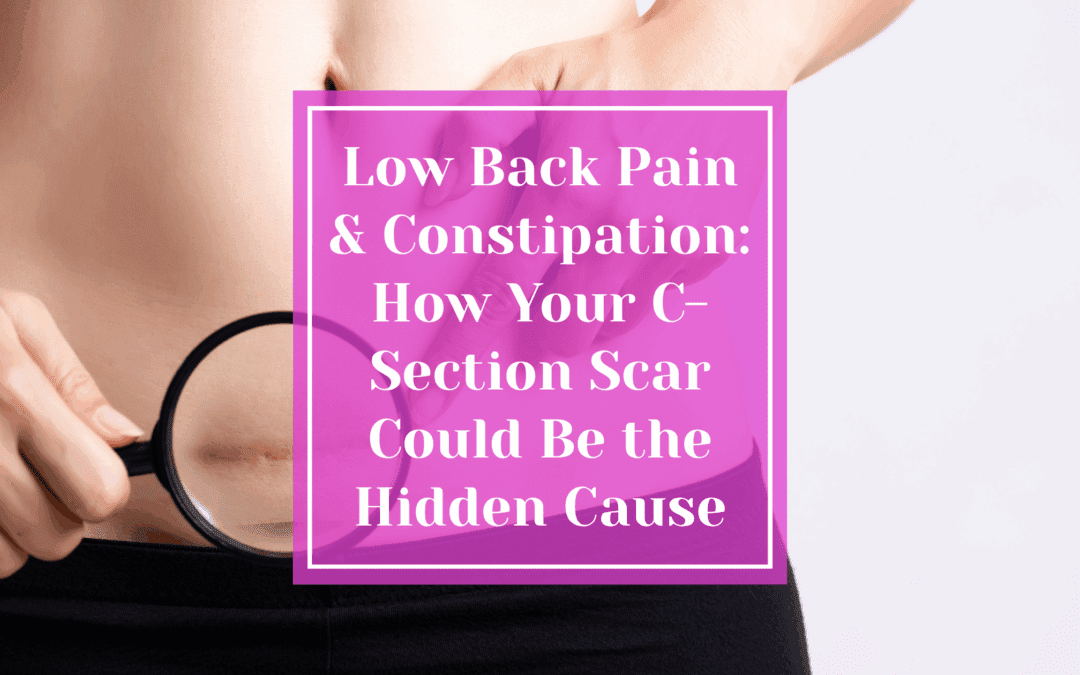
Low Back Pain and Constipation: How Your C-Section Scar Even From Decades Ago Could Be the Hidden Cause

Low Back Pain and Constipation: How Your C-Section Scar Even From Decades Ago Could Be the Hidden Cause

Eight years. That's how long I lived with the debilitating combination of low back pain and constipation that controlled every aspect of my daily life. Eight years of trying everything—acupuncture, chiropractic care, supplements, physical therapy, massage, fiber supplements, probiotics, and countless medical appointments. Eight years of being told "we can't find anything wrong" while my body screamed otherwise.

Most days, I couldn't bend to pick up something I'd dropped. I'd have to lie down multiple times throughout the day just to function. The ongoing cycle of low back pain and constipation was equally frustrating—feeling bloated, uncomfortable, and never fully empty despite trying every remedy imaginable. Then the knee pain started, robbing me of my beloved walks—one of the few joys that had remained accessible to me. I felt trapped in a body that seemed to be failing me, with no clear explanation why.

Not one healthcare provider—not one—ever asked about my C-section scar or explored how improper C-section scar healing from decades ago might be creating the perfect storm for this low back pain constipation pattern.

If you're a woman dealing with this frustrating combination of low back pain and constipation, especially during perimenopause, understanding the fascial connection might hold the missing piece of your puzzle too.

The Invisible Web: Understanding Your Body's Fascial System

Here's what no one tells you when you're wheeled into the operating room for a C-section: they're not just making a simple cut. During a Cesarean section, surgeons cut through seven distinct layers of tissue:

  1. Skin - Your body's protective barrier
  2. Subcutaneous fat - The cushioning layer beneath your skin
  3. Fascia - The connective tissue web that holds everything together
  4. Abdominal muscles - Either cut through or separated
  5. Peritoneum - The membrane lining your abdominal cavity
  6. Uterine muscle - Cut to access your baby
  7. Amniotic sac - The final barrier

Then, after delivering your precious baby, they stitch you back up layer by layer and send you home with instructions to "take it easy for six weeks."

But here's the crucial part they don't explain: fascia is your body's continuous connective tissue network. Think of it as a three-dimensional web that runs from the top of your head to the tips of your toes, connecting and supporting every muscle, organ, and structure in your body.

When this fascial network is disrupted—as it is during any surgical procedure—it doesn't just affect the immediate area. The compensation patterns and restrictions can create problems throughout your entire body, sometimes manifesting years or even decades later. This is why proper C-section scar healing involves more than just the surface skin—it requires understanding how the entire fascial system recovers and adapts.

Why Perimenopause Changes Everything

If you're in your 40s and suddenly experiencing new or worsening symptoms, perimenopause might be amplifying issues that have been quietly brewing since your C-section. During perimenopause, declining estrogen affects:

  • Collagen production - making scar tissue less flexible
  • Joint health - increasing stiffness and pain
  • Inflammation levels - potentially worsening existing restrictions
  • Muscle mass and strength - affecting your body's ability to compensate for fascial restrictions
  • Sleep quality - reducing your body's natural healing capacity

This is why many women over 40 suddenly find themselves dealing with chronic pain, digestive issues, or mobility problems that seem to come out of nowhere. Your body may have been compensating for years, but the hormonal changes of perimenopause can tip the scales.

How Perimenopause Specifically Impacts Old Surgical Scars

The relationship between perimenopause and decades-old surgical scars is more complex than most women realize. Here's what happens in your body during this transition that can suddenly make old scars problematic:

Estrogen's Role in C-Section Scar Healing

Estrogen isn't just about reproduction—it's crucial for maintaining healthy connective tissue throughout your body, including C-section scar healing processes. As estrogen levels fluctuate and decline during perimenopause:

  • Scar tissue becomes less pliable - What was once flexible fascial tissue may become rigid and restrictive
  • Collagen quality decreases - The protein that gives your tissues strength and flexibility begins to deteriorate
  • Tissue hydration changes - Fascia needs proper hydration to glide smoothly; hormonal changes can affect this crucial moisture balance

The Inflammation Connection

Perimenopause often brings increased systemic inflammation, which can:

  • Activate dormant scar tissue - Old adhesions may become inflamed and painful for the first time in years
  • Worsen existing restrictions - Areas that were mildly tight may become significantly problematic
  • Create new compensation patterns - Your body may develop different (and potentially more painful) ways of moving around restrictions

Stress Hormones and Healing

The stress of perimenopause—both physical and emotional—elevates cortisol levels, which can:

  • Impair tissue repair - Your body's ability to maintain and heal fascial restrictions becomes compromised
  • Increase muscle tension - Adding more strain to areas already under stress from scar tissue restrictions
  • Disrupt sleep patterns - Further reducing your body's natural healing capacity

Why Symptoms Seem to Appear "Overnight"

Many women report that their pain or restrictions seemed to develop suddenly, but what actually happens is:

  1. Years of compensation - Your body has been working around fascial restrictions from your C-section
  2. Hormonal tipping point - Perimenopause reduces your body's ability to maintain these compensation patterns
  3. System overload - The combination of hormonal changes, increased inflammation, and decreased tissue quality finally exceeds your body's adaptive capacity

This explains why my back pain became unbearable, even though my C-section was decades earlier. The C-section scar healing process had likely been creating fascial restrictions slowly over time, but perimenopause amplified everything to the point where my body could no longer compensate effectively.

The Hidden Symptoms

Scar-related issues during perimenopause don't always manifest as pain at the surgical site. The combination of low back pain and constipation is particularly common because:

  • Digestive changes - Abdominal adhesions can affect gut motility and function, leading to chronic constipation
  • Postural changes - Fascial restrictions alter how you hold your body, creating compensatory low back pain
  • Breathing difficulties - Thoracic restrictions from upper abdominal scars affect diaphragm function, impacting both digestion and spinal support
  • Pelvic floor dysfunction - Lower abdominal scars can impact pelvic alignment, affecting both bowel function and lumbar spine stability
  • Unexplained fatigue - Your body working harder to move around restrictions while dealing with digestive discomfort

The connection between low back pain and constipation becomes even more apparent when you understand that the fascia connecting your diaphragm, pelvic floor, and lumbar spine all work together as an integrated system. When C-section scars disrupt this system, both bowel function and spinal stability can be compromised.

Please note: These are educational observations based on common patterns and personal experience, not medical diagnoses. Individual experiences may vary, and proper evaluation by qualified healthcare professionals is essential.

The Questions No One Asked About My Low Back Pain and Constipation

For eight years, I answered countless intake forms and sat through numerous consultations about my symptoms of low back pain and constipation. Healthcare providers asked about:

  • Current symptoms
  • Recent injuries
  • Family history
  • Stress levels
  • Sleep patterns
  • Diet and exercise habits

But never once did anyone ask: "Have you ever had abdominal surgery? Do you have any surgical scars?"

This oversight kept me trapped in a cycle of treating individual symptoms rather than addressing the root cause of my low back pain and constipation. My C-section scar had created fascial restrictions that were pulling on my lower back, affecting my posture, and eventually leading to compensatory knee pain, while simultaneously creating adhesions that impacted my digestive function.

Beyond the Physical: The Emotional Journey

Living with chronic pain changes you. The constant discomfort, the limitations, the feeling that your body has betrayed you—it all takes an emotional toll. Add perimenopause into the mix, with its mood fluctuations and identity shifts, and you have a perfect storm for feeling lost in your own life.

I found myself grieving not just for my pain-free past, but for the active, vibrant woman I'd always been. Simple pleasures like gardening, playing with my children, or taking evening walks became sources of dread rather than joy.

The isolation was perhaps the hardest part. How do you explain to others that you're in pain when you "look fine"? How do you maintain relationships when you're constantly canceling plans or needing to leave early?

What I Wish I'd Known: Key Insights for Healing


1. Your Scar Tells a Story

Even decades-old surgical scars can create ongoing issues. The scar tissue may look healed on the surface, but internal adhesions and fascial restrictions can continue to develop and change over time.

2. Hormonal Changes Amplify Everything

Perimenopause doesn't just affect your reproductive system—it impacts your entire body's ability to maintain flexibility, manage inflammation, and heal from old injuries.

3. The Body Compensates Until It Can't

Your body is incredibly adaptable and may mask the effects of fascial restrictions for years. But eventually, these compensation patterns can create pain and dysfunction in seemingly unrelated areas.

4. Holistic Assessment Is Key

Finding healthcare providers who look at the whole person—including surgical history, hormonal status, and lifestyle factors—is crucial for identifying root causes rather than just treating symptoms.

5. Healing Is Possible at Any Age

Even long-standing issues can improve when the underlying cause is properly identified and addressed through appropriate treatment and lifestyle modifications.

The Nutrition Connection: Fueling Your Body's Healing Potential

While discovering the fascial connection was a breakthrough moment, I quickly realized that healing required a comprehensive approach. One crucial piece that's often overlooked is how nutrition can either support or hinder your body's ability to heal from chronic restrictions and manage perimenopause symptoms simultaneously.

How Diet Can Help or Hinder Your Low Back Pain and Constipation Recovery

What you eat can either support your body's healing from fascial restrictions and digestive dysfunction, or make your symptoms of low back pain and constipation worse:

Foods That Support Healing:

  • Anti-inflammatory foods - Wild-caught fish, leafy greens, berries, and turmeric can reduce systemic inflammation affecting both scar tissue and gut lining
  • Fiber-rich foods - But the right types matter; soluble fiber from vegetables and fruits supports gentle bowel movements without excessive strain
  • Magnesium-rich foods - Supports both muscle relaxation (helping low back pain) and natural bowel movements
  • Probiotic foods - Fermented vegetables and kefir support gut microbiome balance

Foods That Can Worsen Symptoms:

  • Inflammatory foods - Processed foods, excess sugar, and industrial oils can increase systemic inflammation
  • Constipating foods - Excess dairy, processed grains, and low-fiber foods can worsen digestive stagnation
  • Food sensitivities - Common triggers like gluten or dairy can increase gut inflammation and worsen fascial restrictions
  • Dehydrating foods/drinks - Excess caffeine and alcohol can worsen both constipation and muscle tension

The Perimenopause Factor: During perimenopause, declining estrogen affects both collagen production (worsening scar tissue flexibility) and digestive motility (increasing constipation risk). This makes anti-inflammatory, hormone-supporting nutrition even more crucial for managing low back pain and constipation.

Hormone-Balancing Nutrition for Tissue Health

The right nutritional approach can also support your body's hormone production and utilization during perimenopause:

  • Supporting collagen synthesis - Vitamin C, zinc, and quality protein help maintain fascial tissue flexibility
  • Balancing blood sugar - Stable glucose levels reduce cortisol spikes that can worsen inflammation and pain
  • Supporting liver detoxification - Helping your body process and eliminate excess hormones more efficiently
  • Providing building blocks - Essential nutrients needed for hormone production and tissue repair

The Gut-Scar Connection in Low Back Pain and Constipation

This is where things get particularly interesting for women experiencing low back pain and constipation after abdominal surgery. Fascial restrictions from C-sections can affect digestive function in multiple ways:

Mechanical Restrictions: Scar tissue can literally create adhesions that restrict bowel movement and function, leading to chronic constipation.

Nervous System Impact: The vagus nerve, which controls digestive function, can be affected by fascial restrictions, disrupting the gut-brain communication that regulates bowel movements.

Postural Compensation: When fascial restrictions alter your posture to protect the scarred area, this can compress abdominal organs and affect their function while simultaneously creating low back pain.

The cycle becomes self-perpetuating:

  • Poor gut health → increased inflammation → worsened scar tissue restrictions → more low back pain
  • Scar tissue restrictions → compromised digestion → chronic constipation → abdominal bloating → more postural compensation
  • Chronic constipation → straining → increased abdominal pressure → more stress on already restricted fascia → worsened low back pain

Breaking this cycle of low back pain and constipation often requires addressing both the fascial restrictions and supporting optimal digestive function through targeted nutrition.

The Path Forward: Hope for Healing

Once I discovered the connection between my decades-old C-section scar and my chronic pain, everything changed. Not overnight—C-section scar healing and addressing fascial restrictions takes time—but finally having answers gave me hope and direction.

Working with practitioners who understood fascial restrictions, combined with targeted nutritional support for inflammation and hormone balance, I began to see improvements I hadn't experienced in years. My back pain decreased significantly, my mobility improved, and I could finally enjoy walking again without knee pain.

The key was addressing the root cause rather than continuing to chase symptoms—and supporting my body's C-section scar healing capacity through comprehensive nutrition.

Your Journey Doesn't Have to Mirror Mine

If you're struggling with the frustrating combination of low back pain and constipation, especially if you're over 40 and in perimenopause, consider whether incomplete C-section scar healing might be creating this interconnected web of symptoms.

You don't have to suffer with chronic low back pain and constipation like I did for years. With the right approach that addresses both fascial restrictions and digestive function through targeted nutrition and lifestyle support, it's possible to break this cycle and reclaim your vitality.

Your body has an incredible capacity for healing when given the right support and environment. Sometimes, the missing piece in resolving low back pain constipation isn't a new treatment or supplement—it's understanding how your C-section scar healing process may have created lasting fascial restrictions that affect multiple body systems.

Struggling with low back pain and constipation during perimenopause? I offer complimentary discovery calls to explore how the right nutrition plan can make all the difference in how you feel. During our conversation, we'll discuss your current symptoms, eating habits, and lifestyle factors. I'll share how a personalized perimenopause diet approach can help reduce inflammation, support digestive health, and give your body the nutrients it needs to thrive during this transition.